
If you have read anything about SEO lately, you have probably run into the term E-E-A-T. It shows up in Google’s guidelines, in SEO tools, and in nearly every conversation about why some blogs rank and others don’t.
E-E-A-T is not a ranking algorithm you can game with a checklist. It is a framework Google uses to judge whether your content deserves to be trusted. Understanding it changes how you write, who you present yourself as, and what you publish.
This guide breaks down what E-E-A-T actually means, why it matters more now than ever, and exactly what you can do to strengthen it on your own blog.
What Does E-E-A-T Stand For?
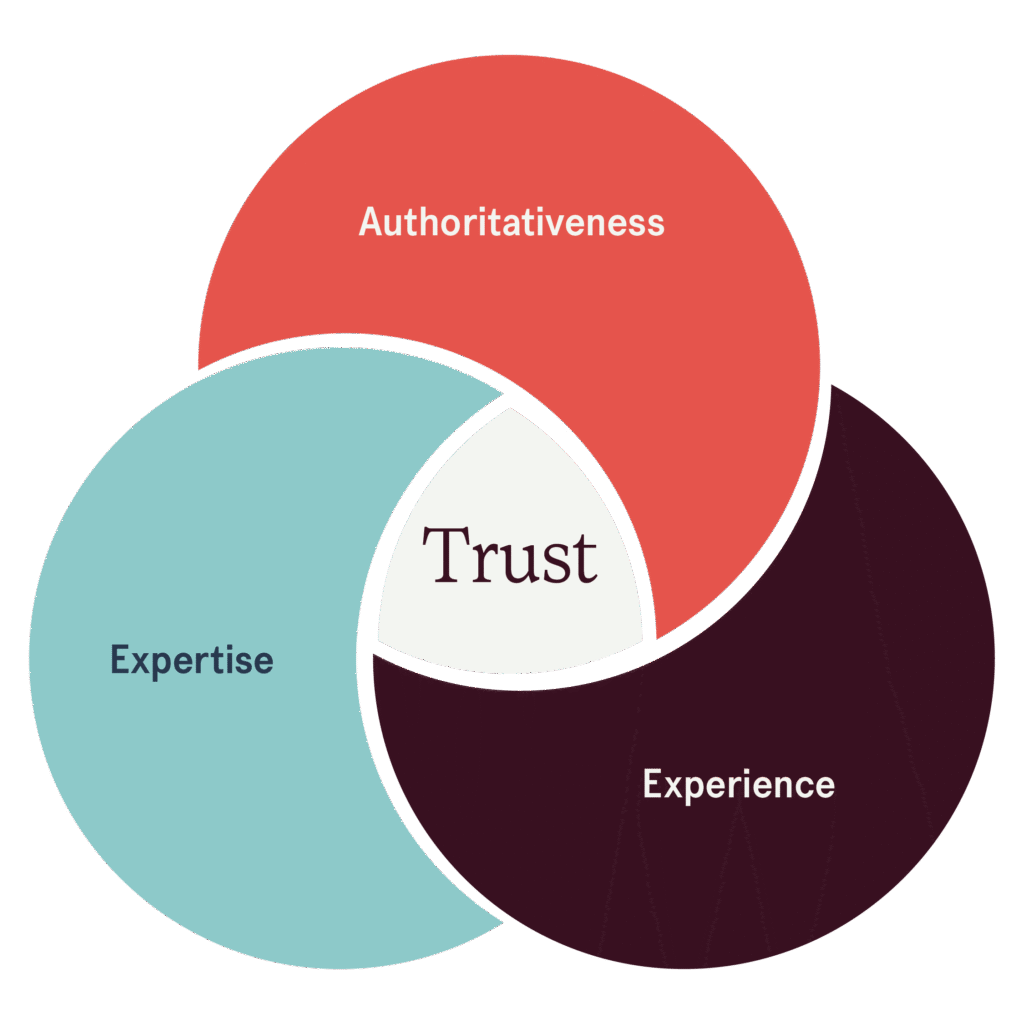
E-E-A-T is an acronym for four qualities Google’s quality raters look for in content:
- Experience — Has the author actually done, used, or lived through what they’re writing about?
- Expertise — Does the author have real knowledge or skill in the subject?
- Authoritativeness — Is the author or website recognized as a credible source on this topic?
- Trustworthiness — Can readers rely on the information being accurate, honest, and safe?
Google added the second “E,” for Experience, in December 2022. Before that, the framework was known simply as E-A-T. The update reflected a growing focus on first-hand experience, not just credentials.
Is E-E-A-T a Direct Ranking Factor?
This is where a lot of confusion happens. E-E-A-T itself is not a single, measurable ranking signal like page speed or backlinks.
Instead, it is a set of principles laid out in Google’s Search Quality Rater Guidelines. Human quality raters use these guidelines to evaluate search results and give feedback to Google’s engineers.
That feedback shapes how Google’s actual ranking systems get built and refined. So while E-E-A-T is not a switch Google flips on your page, it heavily influences the signals that do affect rankings, especially for topics where bad information can cause real harm.
Why E-E-A-T Matters More for Certain Topics
Google pays extra attention to E-E-A-T for what it calls YMYL content — “Your Money or Your Life.” These are topics where poor information could affect someone’s health, finances, safety, or major life decisions.
YMYL topics include:
- Medical and health advice
- Financial and investment guidance
- Legal information
- News and current events
- Safety-related topics
If your blog covers any of these areas, E-E-A-T is not optional. Weak signals of experience or expertise can directly hold back your rankings, even with well-written content.
Lifestyle, hobby, or entertainment blogs face lower scrutiny, but E-E-A-T still helps. Readers trust confident, credible content in any niche.
How E-E-A-T Affects Your Blog in Practice
So what does this actually look like when Google (or a reader) evaluates your blog? Here are the real signals that come into play.
-
Author Information
Anonymous, generic, or missing author bios hurt trust signals. A visible author name, a short bio, and relevant credentials or experience help readers and search engines understand who is behind the content.
-
First-Hand Experience
Content that reflects real experience tends to stand out. Personal photos, specific details, and honest takes (“I tried this for three months and here’s what happened”) signal genuine experience that generic content can’t match.
-
Accuracy and Citations
Linking to credible sources, citing studies, and avoiding unverified claims all strengthen trustworthiness. Outdated or incorrect information does the opposite, even if it was accurate when first published.
-
Site Reputation
Backlinks from respected sites, mentions elsewhere online, and reviews all contribute to authoritativeness. A blog referenced by others in its niche looks more credible than one that exists in isolation.
-
Transparency
Clear “About,” “Contact,” and privacy pages help establish legitimacy. Readers (and Google) want to know who is running the site and how to reach them.
How to Improve Experience Signals
Experience is often the easiest E-E-A-T element for individual bloggers to build, because it comes from simply doing the thing you write about.
Here’s how to show it clearly:
- Share personal photos or original screenshots instead of stock images.
- Describe specific results, timelines, or outcomes from your own experience.
- Mention tools, products, or methods you have personally tested.
- Include honest pros and cons, not just praise.
- Write in first person when sharing a personal process or result.
Readers can usually tell the difference between someone who has done something and someone who is summarizing what they read elsewhere. So can Google’s systems, increasingly.
How to Improve Expertise Signals
Expertise is about demonstrating real knowledge, whether through formal credentials or deep, accurate understanding of a subject.
Ways to strengthen expertise on your blog:
- Add a detailed author bio explaining relevant background, training, or experience.
- Go deeper than surface-level advice; explain the “why,” not just the “what.”
- Correct outdated information promptly when standards or facts change.
- Use accurate terminology, and explain it clearly for readers who are new to the topic.
- Have content reviewed by a subject-matter expert for sensitive or technical topics.
You don’t need a formal degree to demonstrate expertise. Consistent, accurate, in-depth content builds it over time.
How to Improve Authoritativeness Signals
Authoritativeness is largely built outside your own website, through recognition from others in your space.
- Earn backlinks from respected, relevant sites in your niche.
- Get quoted, interviewed, or mentioned by other publications.
- Guest post on established blogs to build visibility and credibility.
- Build a consistent presence across social platforms relevant to your niche.
- Focus content tightly around one niche to build topical authority over time.
A blog that consistently covers one subject in depth earns authority faster than one that spreads across many unrelated topics.
How to Improve Trustworthiness Signals
Trustworthiness ties everything together. Even strong experience and expertise won’t help if readers don’t feel they can trust your site.
- Keep your content accurate and update it when facts change.
- Cite credible sources for statistics, studies, or claims.
- Use HTTPS and keep your site secure.
- Disclose affiliate links, sponsorships, or conflicts of interest clearly.
- Respond to comments and correct errors when they’re pointed out.
Trust is slow to build and easy to lose. A single misleading claim can undo months of credibility-building.
E-E-A-T and AI-Generated Content
AI writing tools have made it easier to publish content quickly. This has also made E-E-A-T more important, not less.
Google has stated that content quality matters more than how it was produced. Still, purely AI-generated content, published without review, tends to lack real experience and specific insight. It often reads as generic, because it is.
How to Use AI Without Hurting E-E-A-T
If you use AI tools as part of your writing process, a few habits protect your credibility:
- Add your own experience, examples, or opinions to AI-drafted content.
- Fact-check every claim before publishing, since AI tools can generate inaccurate information.
- Edit for your own voice instead of publishing raw AI output.
- Keep a human reviewer in the loop for YMYL or technical topics.
- Disclose AI assistance if your audience or niche expects transparency.
AI can speed up research and drafting. It cannot replace the first-hand experience and judgment that make content genuinely trustworthy. The bloggers who use AI well treat it as a starting point, not a finished product.
Common E-E-A-T Mistakes Bloggers Make
Some patterns show up repeatedly on blogs struggling with E-E-A-T. Knowing them helps you avoid the same traps.
- No author byline at all, making it impossible to know who wrote the content.
- Thin “About” pages that say almost nothing about who runs the site.
- Copying or lightly rewriting information from other sites without adding original value.
- Publishing YMYL content without any relevant expertise or review.
- Ignoring outdated content that no longer reflects current facts or standards.
- Overusing AI-generated text without adding personal experience or fact-checking.
None of these mistakes are permanent. Most can be fixed by updating existing content and adjusting how you publish going forward.
A Simple E-E-A-T Checklist for Every Post
Before publishing, run through this quick list:
Author and transparency
- Author name and bio are visible
- Bio reflects relevant experience or expertise
- Site has clear About and Contact pages
Content quality
- Content reflects real experience or research, not just summary
- Claims are backed by credible sources
- Information is accurate and current
Trust signals
- Site uses HTTPS
- Affiliate links or sponsorships are disclosed
- Comments and feedback are monitored and addressed
Running through this checklist regularly, especially on older posts, keeps your E-E-A-T signals strong over time.
Final Thoughts
E-E-A-T is not a trick to master. It is a reflection of whether your content genuinely deserves a reader’s trust. Google built this framework to reward the same qualities readers already care about: real experience, real knowledge, and honest information.
Strengthening E-E-A-T is not a one-time project. It is an ongoing habit, built through visible authorship, accurate content, credible sources, and consistent updates. Bloggers who treat it this way tend to build lasting authority, not just short-term rankings.
Start with your most important posts. Add author details, update outdated facts, and be honest about what you have and haven’t personally experienced. The rest builds from there.
This is part of our SEO for bloggers content hub. For the complete strategy behind ranking and growing a blog with organic traffic, see our full guide.
FAQs
What does E-E-A-T stand for in SEO?
E-E-A-T stands for Experience, Expertise, Authoritativeness, and Trustworthiness. It’s a framework Google uses to judge content quality.
Is E-E-A-T a direct Google ranking factor?
Not directly. It’s part of Google’s rater guidelines, but it influences the signals that do affect rankings, especially for sensitive topics.
What is YMYL content?
YMYL stands for “Your Money or Your Life.” It refers to topics like health, finance, and legal advice where inaccurate content could cause real harm.
How can a new blogger improve E-E-A-T?
Start with a clear author bio, cite credible sources, share real experience, and keep information accurate and up to date.
Does E-E-A-T matter for non-YMYL blogs?
Yes, though less strictly. Trust and credibility help any blog perform better with readers and search engines alike.