
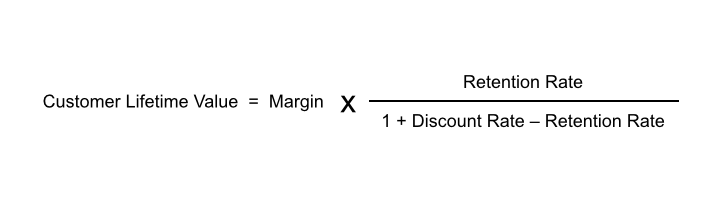
Customer lifetime value is one of the most important metrics in modern business strategy. It goes beyond a single transaction and looks at the total revenue a customer generates throughout their relationship with a brand.
While many businesses focus heavily on acquiring new customers, long term success depends on understanding the full potential of each existing customer. That is where customer lifetime value becomes essential.
When you understand customer lifetime value, you make better marketing decisions, improve retention strategies, and allocate budgets more effectively. Instead of chasing short term sales, you build long term customer value.
This guide explains what customer lifetime value is, how to approach ltv calculation, the customer lifetime value equation, and how to increase customer lifecycle value in practical ways.
What Is Customer Lifetime Value
Customer lifetime value refers to the total amount of revenue a business can expect from a single customer account during the entire business relationship.
It measures:
- How much a customer spends
- How often they purchase
- How long they remain a customer
Rather than focusing on one purchase, customer lifetime value looks at the complete customer lifetime.
For example:
- A customer who buys once and never returns has low lifetime value.
- A customer who purchases regularly for years has high customer lifecycle value.
Businesses that understand this difference make smarter investments in retention and loyalty rather than relying only on constant acquisition.
Why Customer Lifetime Value Matters
Customer lifetime value is not just a financial metric. It influences marketing strategy, pricing, customer service, and overall growth planning.
Here is why it matters:
- It helps determine how much you can spend on customer acquisition.
- It identifies your most profitable customer segments.
- It highlights the importance of retention.
- It supports long term forecasting.
- It improves decision making in ecommerce and subscription businesses.
When you know the lifetime value ecommerce customers bring, you can confidently invest in loyalty programs, email marketing, and retention campaigns.
The Basic CLV Equation
The simplest customer lifetime value equation combines three core variables:
- Average purchase value
- Purchase frequency
- Customer lifespan
In its basic form:
Customer lifetime value equals average purchase value multiplied by purchase frequency multiplied by customer lifespan.
Let us break it down conceptually.
Average purchase value is the average amount a customer spends per transaction.
Purchase frequency is how often they buy within a specific period.
Customer lifespan is how long they continue buying from your business.
When these three elements are multiplied together, you estimate long term customer value.
Understanding LTV Calculation in Detail
A more structured approach to ltv calculation includes the following steps:
- Calculate average purchase value
- Divide total revenue by total number of purchases
- Calculate average purchase frequency
- Divide total purchases by number of unique customers
- Calculate customer value
- Multiply average purchase value by purchase frequency
- Determine average customer lifespan
- Estimate how many years or months customers stay active
- Calculate customer lifetime value
- Multiply customer value by average lifespan
This method provides a reliable estimate of customer lifecycle value.
In ecommerce businesses, lifetime value ecommerce calculations are often automated through analytics tools.
Customer Lifetime in Ecommerce
Lifetime value ecommerce is especially important because online businesses often face high competition and advertising costs.
In ecommerce, customer lifetime value helps:
- Optimize ad spending
- Identify repeat buyers
- Reduce dependency on one time purchases
- Improve subscription models
- Enhance email marketing effectiveness
For example:
- If your average acquisition cost is higher than customer lifetime value, your business model is unsustainable.
- If lifetime value significantly exceeds acquisition cost, your growth potential increases.
Understanding this relationship is crucial for scaling.
Customer Lifecycle Value vs Single Purchase Profit
Many businesses focus only on profit per sale. This approach can limit growth.
Customer lifecycle value looks at the full journey, including:
- Initial purchase
- Repeat purchases
- Upgrades
- Referrals
- Cross selling
- Upselling
A customer who initially purchases a low priced product may eventually buy premium offerings. Their long term customer value may be much higher than their first transaction suggests.
This is why retention often produces higher returns than acquisition alone.
Factors That Influence
Customer lifetime value does not exist in isolation. Several factors influence it.
Key drivers include:
- Product quality
- Customer experience
- Pricing strategy
- Brand trust
- Customer support responsiveness
- Loyalty programs
- Personalization efforts
Improving any of these areas can increase customer lifetime naturally.
For example:
- Faster support responses increase retention.
- Personalized recommendations increase purchase frequency.
- Loyalty rewards increase customer lifespan.
How to Increase Customer Lifetime Value
Increasing customer lifetime value requires strategic effort across marketing and operations.
Here are practical approaches:
Improve Onboarding
- Provide clear guidance after first purchase
- Offer tutorials or usage tips
- Set expectations early
Strong onboarding increases retention from the beginning.
Focus on Retention Marketing
- Send targeted email campaigns
- Offer exclusive promotions to repeat customers
- Use remarketing ads thoughtfully
Retention marketing directly supports long term customer value.
Create Loyalty Programs
- Offer reward points
- Provide member only discounts
- Introduce tiered benefits
Loyalty programs extend customer lifetime and increase frequency.
Personalize Communication
- Use purchase history to recommend products
- Segment customers based on behavior
- Send relevant content
Personalization increases engagement and trust.
Upsell and Cross Sell Strategically
- Recommend complementary products
- Offer premium upgrades
- Bundle related items
This increases average purchase value and supports ltv calculation growth.
Customer Lifetime Value and Customer Acquisition Cost
One of the most important relationships in business is between:
- Customer lifetime value
- Customer acquisition cost
If acquisition cost is higher than lifetime value, profitability suffers.
If lifetime value is significantly higher than acquisition cost, growth becomes sustainable.
A healthy business typically ensures that customer lifetime value is multiple times higher than acquisition cost.
Monitoring both metrics together provides clearer insight than analyzing either alone.
Common Mistakes in LTV Calculation
Many businesses misinterpret customer lifetime value due to common errors.
These include:
- Ignoring churn rate
- Overestimating customer lifespan
- Failing to segment customers
- Not updating calculations regularly
- Using inconsistent time frames
Accurate ltv calculation requires realistic assumptions and updated data.
Segmenting by customer type often reveals major differences in long term customer value.
The Role of Customer Experience
Customer experience directly impacts customer lifetime.
Poor service shortens lifespan. Positive experience extends it.
Important areas include:
- Easy checkout process
- Clear return policies
- Transparent pricing
- Responsive support
- Consistent product quality
Improving experience increases customer lifecycle value organically.
Subscription Models and Lifetime Value
Subscription based businesses depend heavily on customer lifetime value.
In subscription models:
- Retention rate becomes critical
- Churn directly affects long term customer value
- Small improvements in retention dramatically increase lifetime value
Even a slight improvement in monthly retention can significantly boost lifetime value ecommerce metrics.
This is why subscription brands prioritize customer satisfaction and engagement.
Segmenting CLV
Not all customers are equal in value.
Segmentation helps identify:
- High value customers
- Medium value customers
- One time buyers
Once identified, businesses can:
- Offer premium experiences to high value customers
- Nurture medium value customers
- Re engage inactive customers
This targeted strategy increases overall customer lifecycle value.
Predictive CLV
Advanced analytics allow predictive modeling of customer lifetime value.
Predictive approaches analyze:
- Purchase patterns
- Engagement behavior
- Demographics
- Churn risk signals
This helps businesses proactively intervene before customers leave.
Predictive modeling is especially valuable in lifetime value ecommerce environments with large data sets.
Long Term Customer Value and Brand Loyalty
Long term customer value is closely linked to loyalty.
Loyal customers:
- Purchase more frequently
- Recommend the brand
- Provide positive reviews
- Cost less to serve over time
Building trust through transparency, consistent quality, and reliable service strengthens customer lifetime.
Loyalty is not built overnight. It develops through repeated positive experiences.
Measuring and Monitoring CLV
Customer lifetime value should not be calculated once and forgotten.
Regular monitoring helps:
- Track improvements
- Identify declining trends
- Adjust marketing budgets
- Optimize retention efforts
Businesses should:
- Review lifetime value quarterly
- Compare segments
- Align marketing investment accordingly
Consistent measurement keeps strategy aligned with reality.
Final Thoughts
Customer lifetime value is more than a formula. It is a strategic mindset.
Instead of asking how to generate a sale today, customer lifetime thinking asks how to build a relationship that lasts.
By understanding the customer lifetime value equation and applying thoughtful ltv calculation methods, businesses can:
- Make smarter acquisition investments
- Improve retention
- Strengthen loyalty
- Increase profitability
- Build sustainable growth
In ecommerce and beyond, focusing on customer lifecycle value transforms short term transactions into long term partnerships.
When businesses shift from chasing single purchases to maximizing customer lifetime, they unlock a more stable and scalable growth path.
Customer lifetime value is not just a metric. It is a foundation for long term success.