
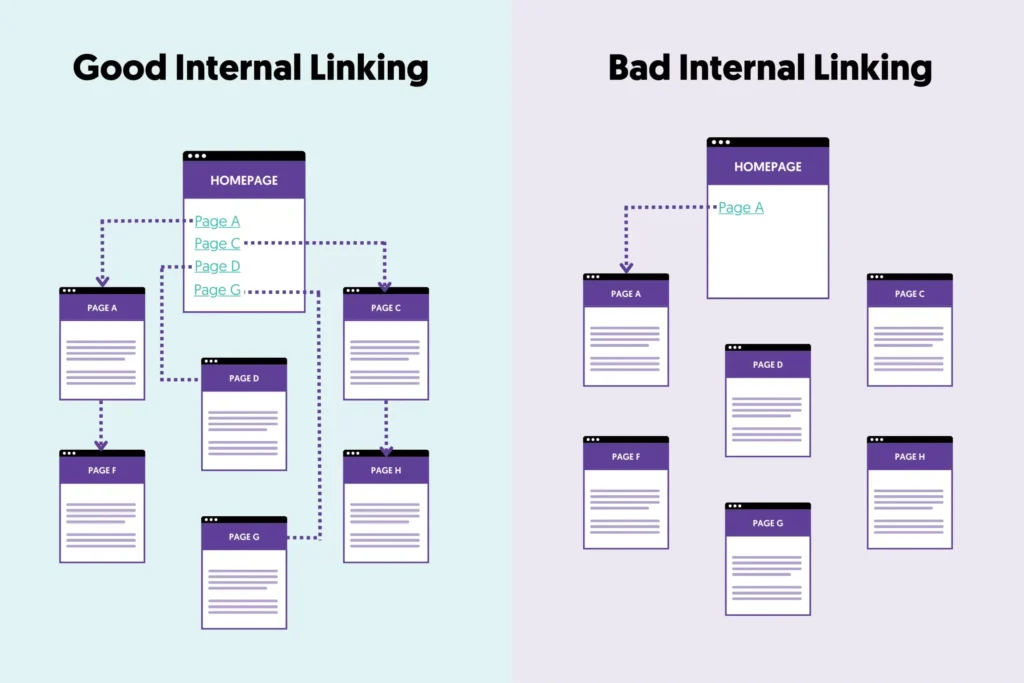
Internal linking is one of the most underrated yet powerful SEO strategies. While many brands focus heavily on backlinks, keywords, and content production, they often overlook how internal linking shapes search visibility, crawlability, and conversions.
In modern SEO marketing and search engine marketing, internal links are no longer just about navigation. They directly influence topical authority, user experience, and how search engines understand your website. With the rise of GEO (Generative Engine Optimization), internal linking has become even more critical in shaping content relationships and semantic relevance.
This ultimate guide explains everything you need to know about internal linking, from fundamentals to advanced strategies used by top SEO agencies and best SEO agencies worldwide.
What Is Internal Linking?
Internal linking refers to linking one page of your website to another page on the same domain. These links are also known as internal backlinks.
Examples include:
- Linking a blog post to a related service page
- Connecting pillar content to supporting articles
- Adding contextual links within blog content
Unlike external backlinks, internal links are fully under your control.
Why Internal Backlinking Matters in SEO and Marketing
Internal backlinking plays a vital role in SEO and marketing because it affects both search engines and users.
Importance of Internal Linking
- Helps search engines discover and crawl pages
- Distributes link equity across your site
- Establishes topical relevance and hierarchy
- Improves user navigation and engagement
- Supports conversions by guiding users
Without a proper internal linking structure, even high-quality content may fail to rank.
Internal Linking and Search Engine Crawling
Search engines use links to discover content. Internal links act as pathways that guide crawlers through your site.
How Internal Links Help Crawlers
- Ensure deep pages are discoverable
- Reduce orphan pages
- Help bots understand content relationships
- Improve crawl efficiency on large websites
Pages with no internal links pointing to them are often ignored or indexed slowly.
Internal Linking Benefits for Rankings
Internal backlinking directly impacts rankings when done strategically.
Key Benefits
- Passes authority from high-performing pages to weaker pages
- Strengthens keyword relevance through anchor text
- Signals content importance to search engines
- Improves dwell time and reduces bounce rate
This is why internal linking is a core practice for every SEO agency.
Internal Linking and Topical Authority
Search engines rank websites that demonstrate expertise around a topic. Internal backlinking helps build that authority.
Topic Clusters and Internal Linking
A topic cluster consists of:
- One pillar page covering a broad topic
- Multiple supporting pages covering subtopics
- Strategic internal links connecting all pages
This structure tells search engines:
- What your main topic is
- Which pages are most important
- How content is semantically related
Internal Linking for GEO (Generative Engine Optimization)
GEO focuses on how AI-driven search engines understand and generate responses from content.
Internal backlinking helps GEO by:
- Creating clear semantic relationships
- Reinforcing topical depth
- Improving content discoverability for AI models
Generative systems prefer well-structured websites where content context is clearly connected.
Types of Internal Links You Should Use
Not all internal links serve the same purpose.
- Navigational Links
Found in:
- Menus
- Footers
- Breadcrumbs
These help users and crawlers understand site structure.
- Contextual Links
Placed within content and surrounded by relevant text. These are the most powerful for SEO.
- Footer Links
Useful for accessibility but should not be overused for SEO manipulation.
Anchor Text Best Practices
Anchor text tells search engines what the linked page is about.
Best Practices
- Use descriptive and relevant anchors
- Avoid generic phrases like click here
- Include keywords naturally
- Do not over-optimize exact match anchors
Good anchor text improves both rankings and user experience.
How to Build Internal Links Strategically
It should be intentional, not random.
Step-by-Step Process
- Identify your top authority pages
- Map important commercial and informational pages
- Link from high-authority pages to priority pages
- Use contextual placement within content
- Maintain logical site hierarchy
This is how professional SEO agencies structure internal links.
Internal Linking for Blog Content
Blogs offer the biggest opportunity to build internal links.
Best Practices for Blog Internal Linking
- Link new posts to older relevant posts
- Update old content with links to new pages
- Link blog posts to service and category pages
- Use consistent anchor text variations
This keeps content fresh and interconnected.
Internal Linking for E-commerce and Service Websites
Internal linking is critical for revenue-focused pages.
For E-commerce
- Link category pages to product pages
- Use related product sections
- Connect blog content to commercial pages
For Service-Based Businesses
- Link blogs to service pages
- Interlink services that are related
- Use case studies as internal linking hubs
This strategy is widely used by best SEO agencies to drive conversions.
Common Mistakes to Avoid
Even experienced marketers make internal linking mistakes.
Major Mistakes
- Creating orphan pages
- Overloading pages with too many links
- Using irrelevant anchor text
- Linking only to top pages
- Ignoring internal links during content updates
Avoiding these errors can dramatically improve site performance.
How Many Internal Links Per Page Is Ideal?
There is no fixed number, but best practices include:
- Prioritizing relevance over quantity
- Ensuring links add value to users
- Keeping links natural and readable
Most high-quality pages include:
- 3 to 10 contextual internal links
- Additional navigational links
Internal Linking and User Experience
Internal linking is not just for SEO. It enhances UX.
UX Benefits
- Helps users find related content
- Increases time on site
- Reduces bounce rate
- Guides users toward conversion pages
Search engines reward good user experience with better rankings.
Tools to Analyze Internal Links
Professional SEO marketing teams use tools to audit internal links.
Popular Tools
- Google Search Console
- Screaming Frog
- Ahrefs
- Semrush
- Sitebulb
These tools help identify broken links, orphan pages, and internal link distribution.
Measuring Internal Link Success
Track performance using:
- Improved rankings for linked pages
- Increased crawl frequency
- Higher organic traffic
- Better engagement metrics
Internal linking improvements often show results faster than external link building.
Internal Linking as a Competitive Advantage
Most websites underutilize internal linking. This creates an opportunity.
By mastering internal linking:
- You strengthen your SEO foundation
- You support content scalability
- You improve both SEO and GEO performance
This is why internal linking remains a core pillar of search engine marketing.
Final Thoughts: Why Internal Linking Is Non-Negotiable
Internal linking is not optional. It is essential.
Key Takeaways
- It improves crawlability and rankings
- It builds topical authority and relevance
- It supports both SEO and GEO
- It enhances user experience and conversions
Whether you are a business owner, marketer, or SEO agency, mastering internal linking will deliver long-term results.