
Search engine optimization has changed dramatically in the past decade, and the pace continues to accelerate. Search engines are constantly improving their ability to interpret content, understand meaning, and deliver the most relevant results to users. As we move deeper into the era of AI-driven search, voice search, and zero-click results, one concept remains increasingly vital for SEO success: schema markup.
Schema markup is not new, but its importance in 2026 is more significant than ever. It supports search engines in interpreting what a page means rather than simply what it contains. It allows publishers to structure content in a way that machines understand, enabling rich search enhancements such as featured snippets, product information, FAQs, reviews, and knowledge panels.
If you are serious about improving visibility, user experience, and click-through rates, understanding schema markup and implementing it properly is essential. This guide explains what schema markup is, how it works, why it matters in 2026, and how businesses can leverage it for competitive advantage.
What Is Schema Markup?
Schema markup is a standardized form of code (structured data) added to webpages to help search engines understand content more clearly. It uses vocabulary defined by Schema.org, a collaborative project supported by Google, Bing, Yahoo, and Yandex. This vocabulary provides a shared language that describes the type of information on a page, such as products, articles, people, organizations, events, FAQs, recipes, ratings, and hundreds of others.
In simple terms, schema markup labels content so search engines know specifically what it represents. For example:
- Without schema, a page may list a product name, price, and review, but search engines must infer context.
- With schema, the markup explicitly tells search engines that this is a product, the price is this amount, and the rating value is based on this number of reviews.
This structured data helps search engines display enhanced search results called rich results, which are more visually appealing and informative than standard search snippets.
How Schema Markup Works
Structured data is embedded in a webpage using semantic markup in formats such as JSON-LD, Microdata, or RDFa. JSON-LD has become the preferred format recommended by Google due to its simplicity and flexibility.
Once implemented, search engines can read the markup, interpret its meaning, and use it to generate rich results in search. These appear in various forms:
- FAQ rich snippets
- How-to snippets
- Product rich results
- Review and rating rich results
- Recipe cards
- Event information
- Article structured results
- Local business details
- Video features
- Breadcrumbs
- Knowledge graph entries
Schema does not directly improve rankings in the traditional sense. Instead, it enhances relevance and improves visibility, which leads to stronger engagement metrics such as higher click-through rate (CTR), lower bounce rate, and more qualified traffic. These are powerful indirect ranking signals.
Why Schema Markup Matters for SEO in 2026
There are several reasons why schema markup has become essential for search optimization in 2026.
-
Search is increasingly AI-driven
Search engines now rely heavily on machine learning and natural language understanding. Schema markup provides structured context that supports these systems, helping them interpret meaning more accurately. As AI models shape search results and answer generation, structured data becomes a foundation for reliable information.
-
Rise of zero-click search
A growing proportion of searches result in no click, because answers appear directly in search results. Without schema, your competitors may be rewarded with these placements. Rich results increase your chances of capturing attention even when users do not click through.
-
Voice search and virtual assistants
Voice assistants like Siri, Google Assistant, and Alexa depend on structured data to deliver precise responses. Schema markup helps ensure your content is recognized as authoritative and voice-ready.
-
Increasing SERP competition
Search results now contain ads, carousels, images, videos, AI summaries, and shopping modules. Standard organic listings are pushed lower. Schema helps content stand out through rich formatting, strengthening CTR even when rankings are competitive.
-
E-commerce requirements
Online product listings now rely heavily on structured data to display pricing, availability, ratings, shipping details, and product features. Without this information, businesses lose visibility to competitors who implement structured data schema.
-
Local business visibility
Local businesses benefit from schema markup such as LocalBusiness, Organization, and Review markup, which enhances map visibility, reputation, and contact details.
-
Better alignment with modern search behavior
Users want fast, reliable, and immediate answers. Schema organizes information to deliver what searchers need in a structured and credible manner.
For these reasons, schema markup has evolved from a technical enhancement to an essential SEO asset in 2026.
Types of Schema Markup
Schema.org offers hundreds of markup types. Some of the most widely used include:
| Type | Best for |
| Article | Blogs, news, educational content |
| FAQPage | Frequently asked question sections |
| HowTo | Step-by-step instructional content |
| Product | E-commerce listings |
| Review & Rating | Testimonials and product feedback |
| Recipe | Food blogs |
| Event | Webinars, concerts, workshops |
| VideoObject | Video SEO |
| LocalBusiness | Brick-and-mortar companies |
| Organization | Brand details |
| Person | Author portfolios or profiles |
| BreadcrumbList | Improved navigation structure |
Selecting the right schema markup depends on page intent and content type. Not every schema type fits every page, and accuracy is essential.
Schema.org Markup Examples
Here are two simple examples using JSON-LD format:
Basic Article Schema Example
<script type=”application/ld+json”>
{
“@context”: “https://schema.org”,
“@type”: “Article”,
“headline”: “Schema Markup: What It Is and Why It Matters in 2026”,
“author”: {
“@type”: “Person”,
“name”: “Author Name”
},
“datePublished”: “2026-01-01”
}
</script>
Product Schema Example
<script type=”application/ld+json”>
{
“@context”: “https://schema.org/”,
“@type”: “Product”,
“name”: “Wireless Headphones”,
“image”: “example.jpg”,
“description”: “Noise-cancelling wireless headphones”,
“brand”: “Brand Name”,
“aggregateRating”: {
“@type”: “AggregateRating”,
“ratingValue”: “4.8”,
“reviewCount”: “367”
}
}
</script>
These are simplified, but they show how structured data schema provides meaning to search engines.
How to Test Schema Markup
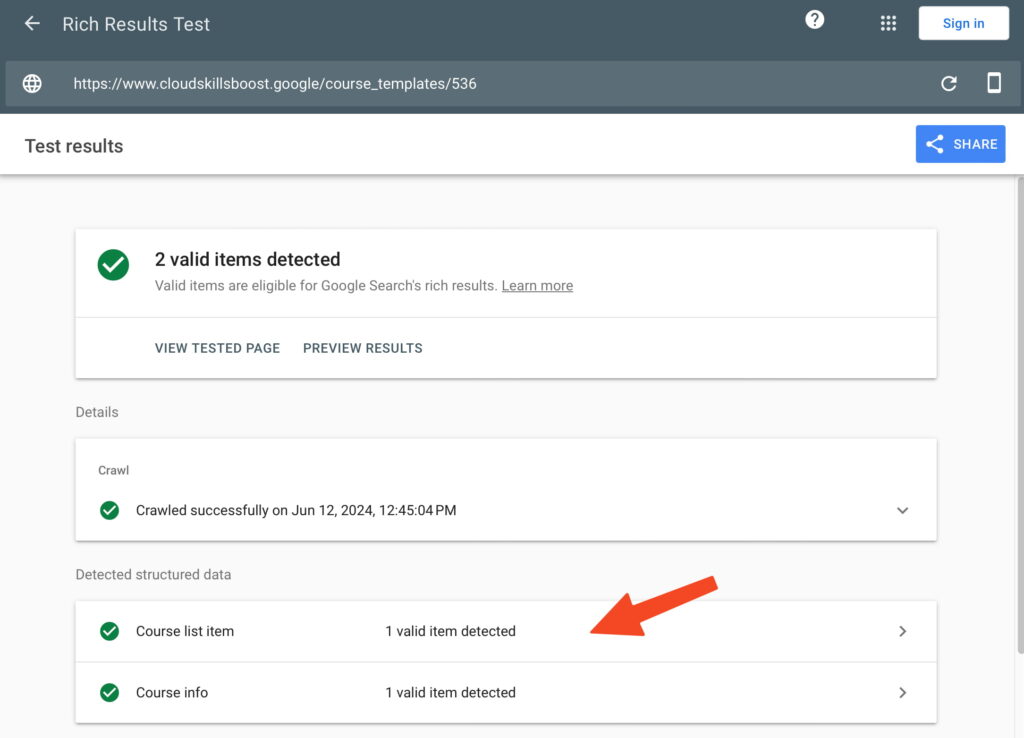
Once implemented, markup must be verified for errors. Tools such as:
- Google Rich Results Test
- Schema Markup Validator (validator.schema.org)
- Structured Data Testing Tool alternatives
- Schema markup checker tools from SEO platforms
These tools show whether markup is valid and whether rich results are eligible.
Common Mistakes to Avoid
Incorrect implementation is a common issue. Errors include:
- Using the wrong schema type
- Marking up hidden or irrelevant content
- Overusing schema markup on pages where it is not appropriate
- Adding markup that contradicts visible content
- Forgetting required properties
- Assuming implementation guarantees rich result display
Google selects rich results based on quality and eligibility; schema is a qualifier, not a guarantee.
How Schema Markup Supports Future SEO
Looking ahead, structured data will become even more essential. AI search, personalized search, e-commerce integrations, and real-time data connections rely on clear metadata. Websites without structured data will find themselves increasingly invisible in richer search experiences.
Schema markup strengthens semantic search foundations. Instead of optimizing for algorithms, businesses optimize for meaning, clarity, and user intent.
How to Get Started with Schema Markup
To begin implementing schema effectively:
- Audit existing site pages and identify which content types need markup
- Prioritize pages with high commercial or informational value
- Use JSON-LD format for efficient implementation
- Add markup through CMS plugins or manual coding
- Validate regularly using testing tools
- Monitor search performance in Google Search Console
- Expand markup coverage gradually
Schema implementation should be a long-term strategy, not a one-time task.
Final Thoughts
Schema markup has evolved far beyond a technical add-on. In 2026, it is a foundational component of search visibility and content relevance. Structured data improves how search engines understand and present information, enabling richer visibility, improved user experience, and stronger performance across search formats.
Businesses that embrace structured data now will maintain visibility and credibility as search continues to shift toward AI-generated results, voice interaction, and zero-click experiences. Schema markup creates clarity in an increasingly competitive search environment, ensuring content is recognized, trusted, and surfaced effectively.
The future of search belongs to websites that are machine-readable as well as human-readable. Schema markup is one of the most powerful tools available to achieve that goal.