
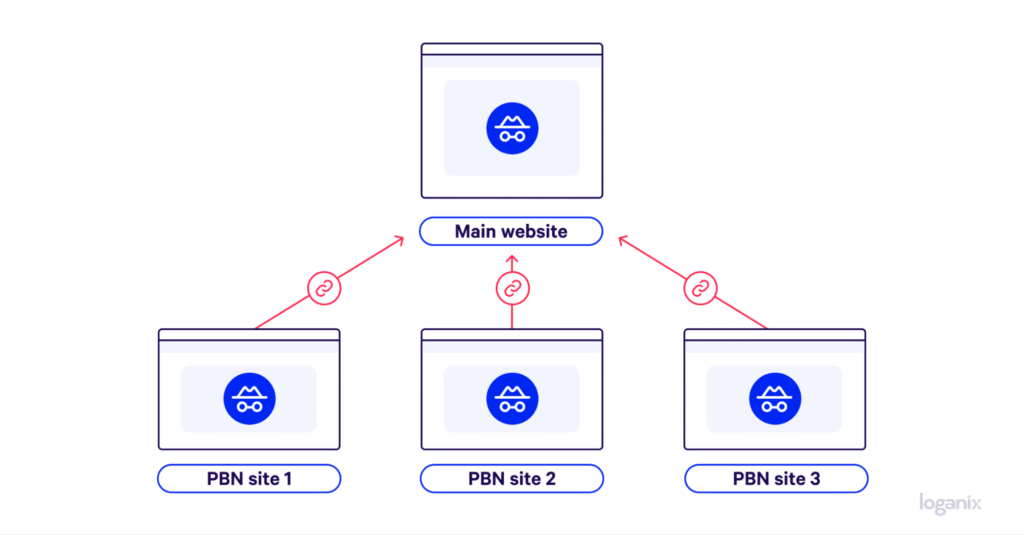
When I first entered the SEO world, one term kept surfacing in private conversations but rarely in public discussions: private blog networks.
Everyone seemed to have an opinion about them. Some treated them like a secret weapon. Others called them a ticking time bomb. A few quietly admitted they had used them, ranked fast, and moved on.
That curiosity eventually led me down a path of studying private blog networks in depth — not just from theory, but from observing how they were built, sold, penalized, and sometimes rewarded.
If you operate in SEO long enough, you will encounter them. The real question is not what they are. The real question is whether they are worth it.
Let’s unpack this properly.
What Are Private Blog Networks?
At its core, private blog networks are collections of websites created primarily for one purpose: to pass link authority to a target website.
A pbn network is usually built using expired or auctioned domains that once had real backlinks and authority. Instead of building a legitimate brand on that domain, the owner repurposes it into a controlled site that links strategically to their “money site.”
In simple terms, you control the websites that link to you.
That control is the appeal.
In traditional blog network SEO, you earn links by publishing valuable content and convincing others to reference it. With private blog networks, you eliminate the outreach process and own the linking domains yourself.
On paper, it sounds efficient. In practice, it is more complicated.
Why Private Blog Networks Became Popular
To understand whether PBNs work, you need to understand why they became popular.
SEO has always revolved around authority. Backlinks are still one of Google’s strongest ranking signals. But earning high-quality links is slow, expensive, and unpredictable.
Private blog networks offered three things marketers love:
- Control
- Speed
- Predictability
If you control ten pbn sites and each links to your target page with optimized anchor text, you can manufacture authority signals quickly.
For affiliate marketers, churn-and-burn projects, and competitive niches, this looked like a shortcut.
And for a while, it worked remarkably well.
How Building a PBN Actually Works
There is a misconception that building a pbn is easy. It is not.
If someone is serious about building a pbn, they typically:
- Purchase expired domains with clean backlink profiles
- Rebuild the sites with relevant content
- Host them on separate IP addresses
- Use different themes and branding
- Avoid obvious footprint patterns
- Link strategically to their primary site
The more sophisticated the operator, the harder it is to detect patterns.
But here is the uncomfortable truth: Google is not naive.
Search engines analyze:
- Hosting footprints
- Link velocity
- Anchor text patterns
- Domain ownership connections
- Content similarity
- Linking relationships
The more artificial the ecosystem looks, the higher the risk.
Do Private Blog Networks Actually Work?
Yes. And no.
That may sound like a vague answer, but it is the only honest one.
I have seen pbn for seo strategies push low-competition pages to the top of search results in weeks. I have also seen entire portfolios disappear overnight after algorithm updates.
Private blog networks can work in the short term, especially in niches where competitors are already using similar tactics.
But sustainability is where things get fragile.
The moment your rankings rely primarily on links from assets you control, you are betting against an algorithm that evolves constantly.
That is not a strategy. That is a gamble.
The Illusion of Authority
One of the biggest strategic problems with private blog networks is the illusion they create.
When your rankings improve after adding pbn sites, it feels like validation. Traffic increases. Revenue grows. Confidence builds.
But the authority is not earned. It is simulated.
There is a psychological difference between earning editorial links and manufacturing them.
Earned links compound. Manufactured links demand maintenance.
The second you stop investing in your network — renewing domains, updating hosting, refreshing content — the system weakens.
That maintenance cost is rarely discussed openly.
The Risk Factor No One Talks About Enough
The biggest risk is not just penalty. It is dependency.
If your growth depends on blog network seo tactics alone, you are building on unstable ground.
Search engines do not need to catch every PBN. They only need to detect patterns at scale and devalue similar signals algorithmically.
Even without a manual penalty, links can lose effectiveness silently.
Rankings drop. Traffic declines. No notification appears.
That is often more dangerous than a visible penalty.
Why Some Marketers Still Use PBN Networks
Despite the risks, private blog networks are still widely used.
Why?
Because certain business models tolerate risk better than others.
For example:
- Short-term affiliate campaigns
- Disposable niche sites
- Experimental SEO projects
- Highly competitive, spam-heavy industries
In these cases, the goal is rapid ROI, not brand longevity.
If a site burns after a year but generated profit, some operators consider that acceptable.
The question you need to ask is simple: is your business disposable?
If the answer is no, PBN reliance becomes harder to justify.
The Brand Perspective
From a brand-building standpoint, private blog networks rarely align with long-term strategy.
If you are building:
- A SaaS company
- An agency brand
- A personal authority platform
- A long-term content asset
You cannot afford unpredictable link foundations.
Real brand growth depends on:
- Digital PR
- Content authority
- Strategic partnerships
- Organic mentions
- Trust signals
Those assets survive algorithm changes because they are rooted in credibility.
Private blog networks, by contrast, are rooted in manipulation of signals.
That distinction matters.
The Ethical Dimension
SEO always exists in a gray zone. The question is not whether tactics are allowed. It is whether they are sustainable and aligned with your positioning.
If you publicly position yourself as a white-hat agency while secretly relying on pbn sites, you introduce reputational risk.
Clients are becoming more informed. They ask questions. Request transparency. Monitor link reports.
Trust, once broken, is difficult to repair.
Marketing strategy is not just about ranking. It is about credibility.
A Smarter Alternative to PBN Dependency
Instead of asking whether private blog networks work, I prefer asking a better question:
What problem are they solving?
Usually, the answer is one of these:
- Lack of backlinks
- Slow authority growth
- Competitive pressure
- Limited outreach success
Each of these problems has legitimate strategic solutions.
For example:
Investing in linkable assets.
Running digital PR campaigns.
Creating original data studies.
Building relationships in your niche.
Acquiring editorial placements strategically.
These methods require more patience, but they create defensible growth.
Private blog networks create leverage.
Authority marketing creates resilience.
My Personal Conclusion on PBN for SEO
After studying and observing multiple cases, I do not see private blog networks as inherently evil.
I see them as high-risk leverage tools.
They can amplify growth under certain conditions.
>They can accelerate results in specific environments.
>They can also collapse unpredictably.
For me, the deciding factor is this:
Would I build a seven-year business on it?
The answer is no.
I prefer systems that survive algorithm updates, industry shifts, and competitive pressure.
Search engines are investing billions into spam detection and pattern recognition. Betting long-term strategy against that trajectory feels misaligned.
The Strategic Lens
Every SEO decision should pass through three filters:
- Does it align with the brand vision?
- Is the upside worth the downside?
- Will it still make sense in three years?
Private blog networks often pass the first filter for short-term sites.
They rarely pass the third.
That is why I consider them tactical, not foundational.
Final Thoughts
Private blog networks are neither myth nor magic.
They are controlled link ecosystems designed to influence rankings.
They can work.
>They can fail.
>They require maintenance.
>They carry risk.
>They demand strategic clarity.
The real question is not whether they work.
The real question is whether they fit your business model.
If you are building something durable, your SEO strategy should reflect durability.
If you are chasing short-term gains, you may accept volatility.
Just make the decision consciously.
Because in SEO, the cost of shortcuts is rarely immediate — but it is almost always eventual.