
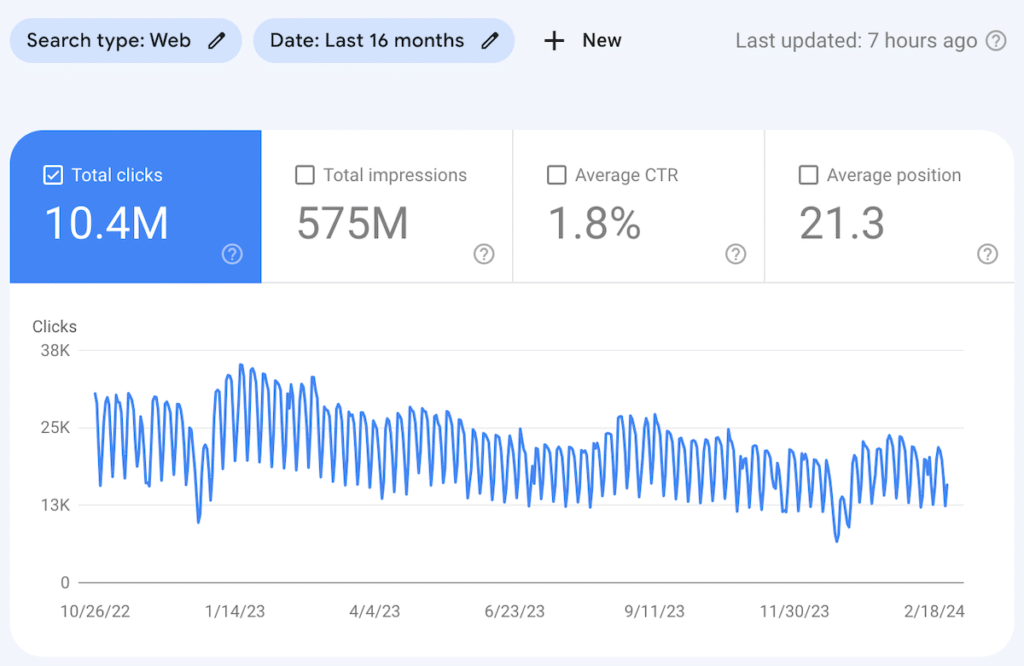
A sudden drop in organic traffic can feel alarming, especially when your website depends on consistent visibility from search engines. Before jumping to conclusions or making random changes, the smartest approach is to analyze what’s really happening beneath the surface.
Traffic fluctuations are normal, but sustained decline in organic search traffic often signals deeper issues. The key to solving the problem lies in how you segment the data. Instead of looking at overall traffic for a website, breaking it down into meaningful sections helps uncover patterns, identify causes, and guide effective recovery.
Why organic traffic drops happen
Understanding the reasons behind declining web traffic for a website is the first step.
Common causes
- Search engine algorithm updates
- Technical SEO issues
- Loss of backlinks
- Increased competition
- Content becoming outdated
- Poor user experience
- Changes in search intent
- Tracking or analytics errors
Without segmentation, these issues remain hidden inside aggregated data.
What does it mean to segment the data
Segmenting means dividing your organic search data into smaller, meaningful groups. Instead of viewing all organic visits together, you analyze subsets based on specific criteria.
Benefits of segmentation
- Identifies exact problem areas
- Helps prioritize fixes
- Improves organic search optimization
- Supports smarter organic seo strategies
- Makes decision-making data-driven
This is the foundation of any strong organic search strategy.
Start with device segmentation
Different devices often show different performance trends.
Segment by
- Desktop
- Mobile
- Tablet
What to look for
- A drop only in mobile traffic may indicate mobile usability issues
- Desktop-only decline may point to ranking or content problems
- Differences in bounce rate and engagement
If mobile organic search traffic drops significantly, check page speed, responsiveness, and Core Web Vitals.
Segment by location
Geographical performance can reveal valuable insights.
Segment by
- Country
- Region
- City
Insights you may discover
- Traffic decline in specific regions due to local competition
- Changes in regional search behavior
- Localization issues in content
For businesses targeting specific areas, this segmentation is crucial to maintaining traffic for a website.
Segment by landing pages
This is one of the most powerful ways to diagnose issues.
What to analyze
- Top-performing pages losing traffic
- Pages with sudden drops in organic visits
- Pages that no longer rank for key queries
Common findings
- Outdated content losing relevance
- Competitors outranking your pages
- Keyword cannibalization
- Content mismatch with user intent
Updating and optimizing these pages can quickly help get more organic traffic.
Segment by keywords
Keyword-level data provides a deeper understanding of organic search performance.
Segment by
- Branded keywords
- Non-branded keywords
- High-volume keywords
- Long-tail keywords
What to identify
- Ranking drops for important keywords
- Loss of visibility for non-branded search
- Decline in impressions
A drop in non-branded organic search traffic often signals a broader SEO issue.
Segment by search intent
Search intent plays a huge role in rankings and engagement.
Types of intent
- Informational
- Navigational
- Transactional
- Commercial
Why it matters
- Misalignment with intent leads to lower rankings
- Users leave quickly if content doesn’t match expectations
- Search engines prioritize intent relevance
Aligning content with intent is a core part of organic search optimization.
Segment by content type
Different types of content perform differently in organic search.
Segment by
- Blog posts
- Product pages
- Category pages
- Landing pages
Insights
- Blog traffic dropping may indicate outdated topics
- Product page decline may suggest competition or pricing issues
- Category pages losing visibility may need better optimization
This helps refine your organic seo strategies.
Segment by traffic trends over time
Time-based analysis helps identify patterns.
Segment by
- Daily trends
- Weekly trends
- Monthly trends
What to watch
- Gradual decline vs sudden drop
- Seasonal traffic changes
- Impact of recent updates
A sudden drop may indicate technical or algorithm issues, while gradual decline often relates to content relevance.
Segment by SERP features
Search engine results pages have evolved, and features can impact traffic.
Track visibility in
- Featured snippets
- People also ask sections
- Image results
- Video results
Why this matters
- Losing a featured snippet can reduce traffic significantly
- Competitors gaining SERP features may take your clicks
Optimizing for these features is part of a modern organic search strategy.
Segment by user behavior
User engagement signals can highlight hidden problems.
Metrics to analyze
- Bounce rate
- Average session duration
- Pages per session
Insights
- High bounce rate may indicate poor content relevance
- Low engagement may signal usability issues
- Sudden changes may point to technical errors
Improving user experience is essential to maintain organic visits.
Segment by backlinks and authority
Backlinks influence rankings and organic search visibility.
Analyze
- Lost backlinks
- New backlinks
- Referring domains
Common issues
- Loss of high-quality backlinks
- Increase in low-quality links
- Competitors gaining stronger links
Link building remains an important part of organic seo strategies.
Segment by technical SEO factors
Technical issues can silently impact your organic search traffic.
Check for
- Crawl errors
- Indexing issues
- Broken links
- Page speed problems
- Mobile usability issues
Impact
- Pages not indexed won’t generate traffic
- Slow websites reduce rankings and engagement
Fixing technical issues can quickly restore web traffic for a website.
Segment by competitors
Sometimes the issue is not your site but increased competition.
Analyze
- Competitor rankings
- New content from competitors
- Keyword overlap
Insights
- Competitors targeting your keywords
- Better content replacing yours
- Stronger SEO strategies from others
Monitoring competitors helps refine your organic search strategy.
How to take action after segmentation
Once you segment the data, the next step is action.
Prioritize fixes
- Address technical issues first
- Update declining content
- Improve keyword targeting
- Strengthen internal linking
Improve content
- Match search intent
- Add updated information
- Improve readability and structure
Optimize user experience
- Improve page speed
- Enhance mobile usability
- Reduce bounce rate
Strengthen authority
- Build quality backlinks
- Promote content
- Improve brand visibility
How to get more organic traffic after a drop
Recovering traffic requires a strategic approach.
Proven methods
- Refresh old content regularly
- Focus on long-tail keywords
- Improve on-page SEO
- Create high-quality, helpful content
- Optimize for featured snippets
- Build topical authority
Consistency is key to long-term growth in organic search traffic.
Mistakes to avoid
When traffic drops, many make rushed decisions.
Avoid these mistakes
- Making multiple changes at once
- Ignoring data and relying on assumptions
- Deleting underperforming content too quickly
- Over-optimizing keywords
- Neglecting technical SEO
A structured approach always delivers better results.
Final thoughts
If your organic traffic is down, the solution is not guesswork but clarity. Segmenting your data allows you to understand exactly where and why the drop is happening.
Instead of looking at overall organic search numbers, break them down into meaningful segments such as device, location, keywords, and content type. This approach reveals actionable insights and helps you recover faster.
A strong organic search strategy is built on continuous analysis, optimization, and adaptation. With the right segmentation and actions, you can not only recover lost traffic but also build a more resilient and scalable SEO foundation.