
Artificial intelligence is no longer just a backend tool. It has become a front-facing interface that shapes how users discover information, interact with brands, and make decisions. As AI tools grow in influence, understanding how your content appears inside them is becoming just as important as traditional search engine optimization.
At the center of this shift are AI prompts and AI visibility. If you are creating content, running a business, or managing digital marketing, learning how to track and optimize these elements can give you a strong advantage.
This guide explains what AI prompts are, how visibility works inside AI systems, and the right way to measure and improve your presence.
What Are AI Prompts
AI prompts are the instructions or queries users provide to AI systems to generate responses. These prompts guide how the AI interprets intent and delivers output.
Types of AI Prompts
- Text prompts for content generation
- AI image prompts for visual creation
- Instructional prompts for tasks and automation
- Conversational prompts used in chat interfaces
AI Prompt Examples
Understanding different prompt formats helps you see how users interact with AI.
- Write a blog post about healthy pregnancy tips
- Generate a product description for organic skincare
- Create an image of a modern living room with natural lighting
- Explain SEO strategies for beginners
Each of these prompts influences how content is generated and what sources or patterns the AI uses.
What Is AI Visibility
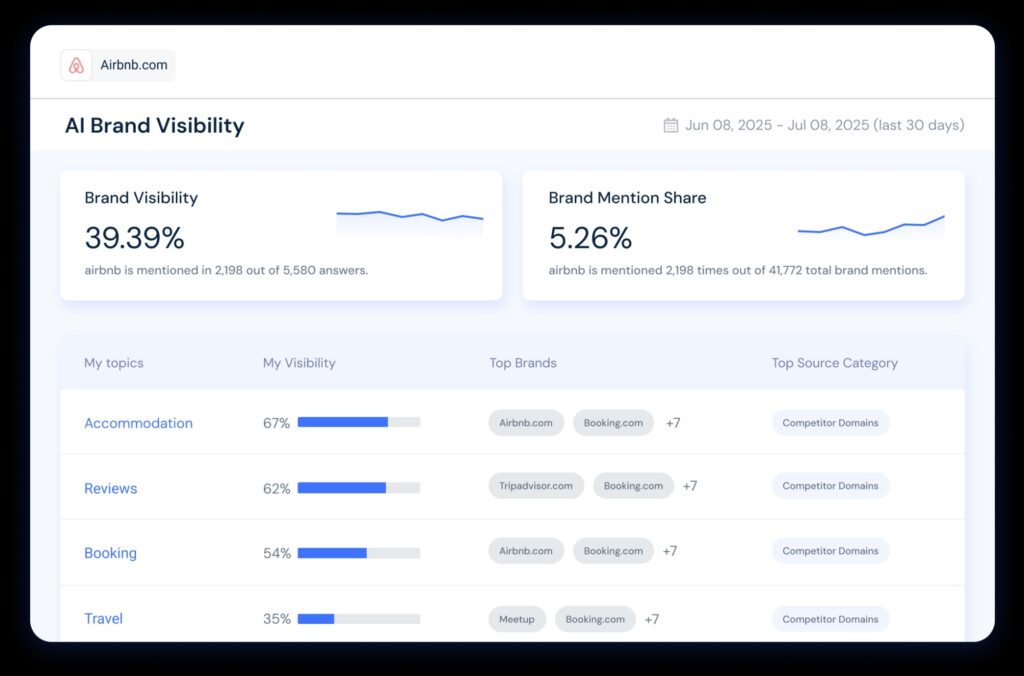
AI visibility refers to how often and how accurately your content, brand, or ideas appear in AI-generated responses.
Unlike traditional search engines, AI systems do not just display links. They generate answers based on learned patterns, training data, and contextual understanding.
Why AI Visibility Matters
- Users are increasingly relying on AI for answers instead of search engines
- AI responses often summarize multiple sources into one answer
- Being included in AI outputs builds authority and trust
- It influences decision-making without users visiting multiple websites
How AI Systems Use Prompts
AI systems process prompts through several steps:
- Understanding user intent
- Identifying relevant patterns and data
- Generating structured responses
- Refining output based on clarity and context
The quality of prompts directly affects the quality of responses.
The Connection Between AI Prompts and Visibility
There is a direct relationship between how prompts are written and what content gets surfaced.
Key Factors
- Clear prompts lead to more accurate outputs
- Specific prompts reduce ambiguity
- Context-rich prompts produce deeper answers
- Structured prompts improve consistency
For content creators, this means optimizing content in a way that aligns with how prompts are framed.
How to Track AI Visibility
Tracking AI visibility is different from tracking website traffic or rankings. It requires a mix of observation, experimentation, and analysis.
Monitor AI Responses
- Search for your topic using different AI tools
- Use variations of prompts related to your niche
- Observe whether your brand or content appears
- Analyze how your content is represented
Track Prompt Variations
- Test multiple versions of the same query
- Compare results across tools
- Identify patterns in responses
For example:
- Basic prompt versus detailed prompt
- Short query versus long query
- Generic versus specific phrasing
Analyze Content Inclusion
- Check if your ideas or frameworks appear in AI responses
- Look for unique phrases or concepts you have created
- Identify whether your content is being summarized
Use Feedback Loops
- Refine your content based on AI outputs
- Update articles to improve clarity and structure
- Align your content with commonly used prompt styles
Optimizing Content for AI Visibility
To improve AI visibility, your content should be structured in a way that AI systems can easily interpret.
Focus on Clarity
- Use simple and direct language
- Avoid unnecessary complexity
- Provide clear explanations
Use Structured Content
- Break content into sections
- Use headings and subheadings
- Include bullet points where necessary
Answer Questions Directly
- Address common user queries
- Provide concise answers followed by detailed explanations
- Include variations of questions within your content
Include Contextual Depth
- Explain concepts thoroughly
- Provide examples
- Add practical insights
Creating Effective AI Prompts
If you are using AI tools, knowing how to write strong prompts is essential.
Characteristics of Good Prompts
- Clear intent
- Specific instructions
- Relevant context
- Defined output format
Improving AI Prompt Examples
Instead of:
- Write about marketing
Use:
- Write a detailed blog post about digital marketing strategies for small businesses focusing on SEO and social media
AI Image Prompts
AI image prompts require descriptive detail.
Examples:
- A minimalistic workspace with natural light and indoor plants
- A futuristic city skyline at sunset with neon lighting
Common Mistakes in Prompts
- Being too vague
- Overloading with unrelated details
- Ignoring structure
- Not specifying output format
Tools and Methods to Track AI Visibility
While the field is still evolving, several methods can help you track visibility.
Manual Testing
- Run prompts across multiple AI platforms
- Document responses
- Compare differences
Content Audits
- Review existing content
- Identify gaps in clarity and structure
- Update outdated information
Keyword and Prompt Mapping
- Map common user queries to your content
- Align content with prompt variations
- Include natural language phrasing
Analytics Integration
- Track referral traffic from AI tools if available
- Monitor engagement metrics
- Identify changes in user behavior
The Role of AI in Content Discovery
AI is changing how users discover information.
Shift from Search to Answers
- Users prefer direct answers over browsing multiple links
- AI reduces the need for traditional search navigation
Importance of Authority
- High-quality content is more likely to be reflected in AI outputs
- Consistent expertise builds recognition
Content Adaptability
- Content should be adaptable across formats
- Written, visual, and conversational formats all matter
Challenges in Tracking AI Visibility
Tracking AI visibility is not always straightforward.
Lack of Transparency
- AI systems do not always show sources
- Attribution can be unclear
Constant Updates
- AI models evolve frequently
- Outputs may change over time
Limited Metrics
- Traditional metrics do not fully apply
- New measurement frameworks are still developing
Future of AI Prompts and Visibility
The role of AI prompts will continue to grow.
Expected Trends
- More personalized AI responses
- Greater integration with search engines
- Increased importance of conversational content
- Rise of multimodal prompts including text and images
Practical Strategy to Stay Ahead
To remain visible in AI-driven environments, focus on:
Content Strategy
- Create high-quality, informative content
- Keep content updated
- Focus on user intent
Prompt Awareness
- Understand how users ask questions
- Align content with real-world queries
- Experiment with prompt variations
Continuous Learning
- Monitor AI trends
- Adapt strategies regularly
- Stay flexible
Final Thoughts
AI prompts and visibility are reshaping the digital landscape. Whether you are a content creator, marketer, or business owner, understanding how AI interprets and presents information is becoming essential.
By focusing on clarity, structure, and user intent, you can improve how your content appears in AI-generated responses. Tracking visibility may still be evolving, but those who start early will have a clear advantage.